
Hair transplant costs more than most people expect, and less than most clinics want you to think. The range is genuinely wide from around $1,500 for a full procedure abroad to $25,000 or more at a premium US clinic and understanding what drives that gap matters more than shopping for the lowest number.
This guide breaks down what a hair transplant actually costs in 2026, by country, by technique, and by graft count. By the end, you’ll know what to budget, what to question, and what those differences actually mean for your outcome.
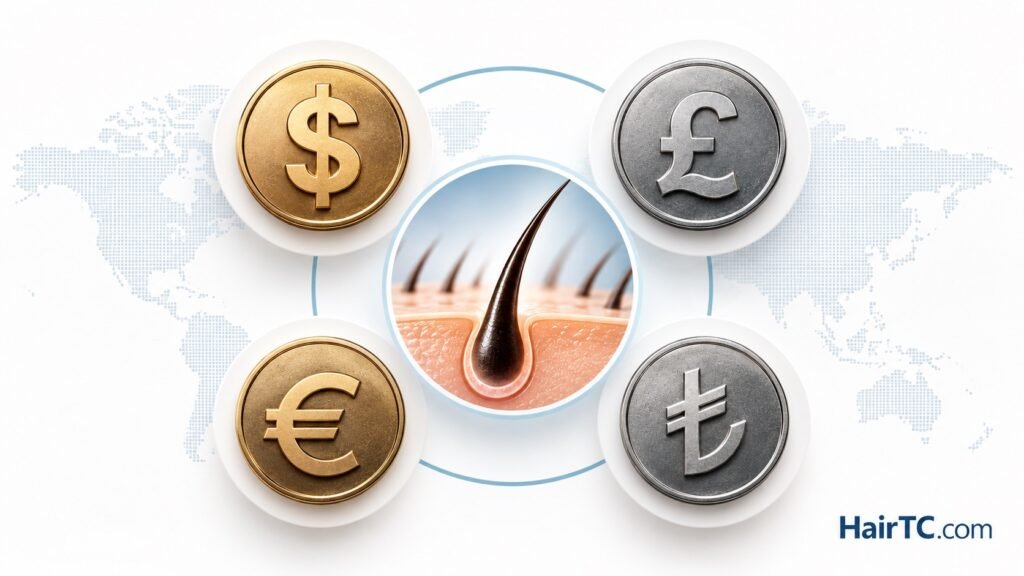
Average Cost of Hair Transplant by Country
In the US, most patients pay between $5,000 and $15,000. In Turkey, the same procedure runs €2,500 to €5,000 all-inclusive. The UK falls somewhere in between at £4,000 to £12,000 depending on the clinic and technique. These aren’t small differences but the gap isn’t entirely explained by quality, which is worth understanding before you book anything.

Hair Transplant Cost by Country (2026)
The variation in cost across countries has more to do with operating costs, labor markets, and currency than it does with surgical quality. Turkey has dominated the global market for over a decade partly because the economics allow top clinics to offer competitive all-inclusive packages that simply aren’t possible in Western healthcare markets.
| Country | Average Cost Range | Notes |
|---|---|---|
| USA | $5,000 – $15,000 | Per-graft pricing standard; rarely includes extras |
| UK | £4,000 – £12,000 | Highly variable by region and clinic type |
| Turkey | €2,500 – €5,000 | Usually all-inclusive: hotel, transfers, medication |
| Spain | €3,000 – €7,000 | Growing destination; strong European reputation |
| Germany | €4,000 – €10,000 | High standards; premium pricing |
| Mexico | $2,000 – $5,000 | Increasing in popularity for US patients |
| India | $1,000 – $3,000 | Lowest cost; requires careful clinic research |
| Thailand | $2,000 – $4,500 | Strong reputation in Southeast Asia |
One thing worth noting: clinics in Turkey, Spain, and Mexico typically quote all-inclusive packages. Clinics in the US and UK typically quote the procedure alone. When you see a $5,000 US quote next to a €3,000 Turkey quote, the US figure often doesn’t include the hotel, medication, aftercare products, or post-operative treatments that are standard in the Turkish package. That doesn’t close the gap entirely, but it narrows it.
Hair Transplant Cost by Technique
The technique you choose affects both the cost and the outcome. Most reputable clinics now offer two or three options and will recommend based on your specific hair loss pattern rather than upselling you to the pricier method.
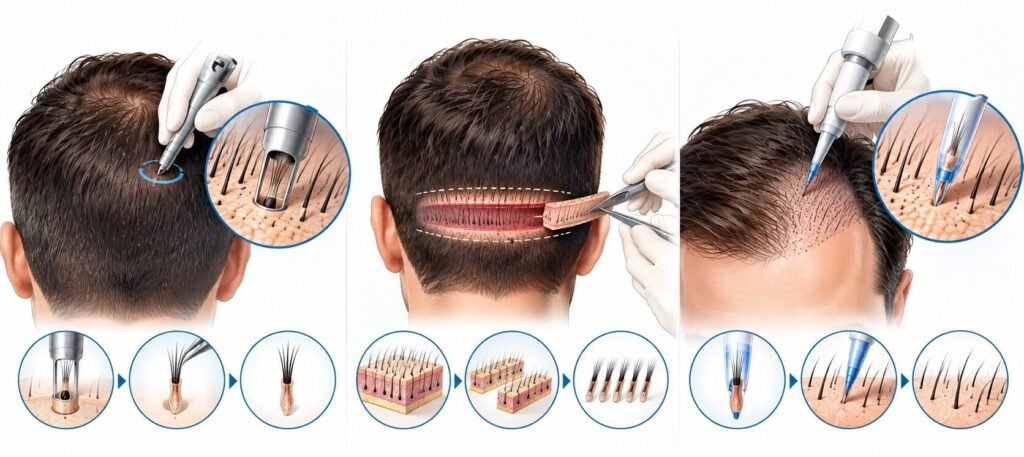
FUE (Follicular Unit Extraction) Currently the most widely used technique worldwide. Individual follicles are extracted one at a time from the donor area, which leaves no linear scar and allows shorter recovery. In the US, FUE typically costs between $6,000 and $15,000. In Turkey, €2,500 to €4,500.
FUT (Follicular Unit Transplantation) Sometimes called the strip method. A strip of scalp is removed from the donor area and dissected into individual grafts. It leaves a linear scar but can yield a higher graft count in a single session. FUT tends to cost slightly less than FUE in markets where both are offered roughly 10 to 20 percent less. Less common today, though still the right choice for some patients.
DHI (Direct Hair Implantation) A variation of FUE that uses a Choi pen to implant grafts directly without pre-made channels. It allows for higher density in the recipient area and is often preferred for hairline work. Typically 10 to 30 percent more expensive than standard FUE because it’s more labor-intensive. In Turkey, expect €3,000 to €5,500. In the US, $8,000 to $18,000.
Sapphire FUE Standard FUE but with sapphire-tipped blades for the channel-opening stage. It tends to produce smaller incisions, faster healing, and slightly better density. Many clinics charge a modest premium for this usually €300 to €600 more than standard FUE in Turkey, or included in the price at premium clinics.
Robotic Hair Transplant (ARTAS) Uses robotic assistance for graft extraction. Available primarily in the US. Higher cost often $10,000 to $20,000 though the clinical outcomes aren’t consistently superior to skilled manual FUE. Worth considering if precision extraction appeals to you, but not a necessary spend.
Hair Transplant Cost by Graft Count

Most of the world outside North America and the UK prices hair transplants per procedure rather than per graft. But understanding graft count still matters because it tells you what your hair loss stage actually requires and sets realistic expectations about what any given budget will achieve.
| Graft Count | Typical Coverage | US Cost Range | Turkey Cost Range |
|---|---|---|---|
| 1,000 – 1,500 grafts | Minor recession, hairline only | $3,000 – $6,000 | €1,500 – €2,500 |
| 2,000 – 2,500 grafts | Moderate front and mid-scalp | $5,000 – $9,000 | €2,000 – €3,500 |
| 3,000 – 3,500 grafts | Significant loss, Norwood 3-4 | $7,000 – $12,000 | €2,500 – €4,500 |
| 4,000 – 5,000 grafts | Advanced loss, Norwood 5-6 | $10,000 – $18,000 | €3,500 – €5,500 |
| 5,000+ grafts | Extensive loss, often two sessions | $15,000 – $25,000 | €4,500 – €7,000+ |
In the US, the per-graft price typically runs between $3 and $10 depending on the clinic and surgeon. $3 to $5 per graft is common at well-regarded mid-tier clinics. $7 to $10 per graft puts you in the specialist or celebrity surgeon tier. Anything below $2 per graft in the US warrants genuine scrutiny.
In Turkey, most reputable clinics have moved to flat-rate packages that include all grafts needed, meaning you’re not penalized for needing more. This structure makes total cost planning much simpler for international patients.
What Does a Hair Transplant Package Include?
This is where comparisons get tricky. The headline price means very different things depending on where you’re looking.

What a Turkey all-inclusive package typically covers:
- The procedure itself (all grafts)
- Pre-operative blood tests
- Local anesthesia
- 3 to 5 nights at a partner hotel
- Airport transfers throughout your stay
- Multilingual patient coordinator
- Post-operative medications and care kit
- First hair wash at the clinic
- 12 to 18 months of follow-up support
- PRP treatment (at higher-tier clinics)
What a US or UK quote typically covers:
- The procedure itself
- Local anesthesia
That’s often it. Hotel, travel, aftercare products, medications, and follow-up consultations are additional line items. When you add those up for a US procedure even just two nights at a decent hotel near the clinic plus medication, you’re often adding $500 to $1,500 to the base price.
This doesn’t make Turkey the automatic right choice, but it’s why the sticker price comparison is misleading without context.
Hair Transplant Cost in the USA: What You’ll Actually Pay
The US market is fragmented and the pricing reflects it. You’ll find everything from budget chains to single-surgeon boutique practices to celebrity-facing clinics, and the cost range spans accordingly.
Budget tier ($3,000 – $6,000): High-volume clinics, technician-assisted procedures, or smaller graft counts. Results vary significantly. Worth doing thorough research before choosing this tier.
Mid-tier ($6,000 – $12,000): The most competitive space. Many solid, experienced clinics operate here. A 3,000-graft FUE procedure at a JCI-accredited clinic in Miami, Houston, or Chicago typically lands in this range.
Premium tier ($12,000 – $25,000): Board-certified hair restoration surgeons with extensive independent track records. ISHRS members. Surgeon-performed procedures from extraction through implantation. Worth it for complex cases or if you want the most experienced hands possible.
City matters too. New York, Los Angeles, Chicago, and Miami have higher operating costs and that comes through in pricing. You’ll generally pay 15 to 25 percent more in those markets than you would at an equally qualified clinic in Houston, Dallas, or Nashville.
Hair Transplant Cost in Turkey: What’s Really Going On
Turkey has performed more hair transplants than any other country for the past decade and the pricing advantage is real and structural. Lower operating costs, favorable exchange rates, and a high density of experienced surgical teams create a market where quality and affordability genuinely coexist at the top end of the market.
The range in 2026 for reputable, internationally accredited Turkish clinics runs from roughly €2,500 to €5,500 for all-inclusive packages covering most standard graft counts.
What you get at €2,500 versus €5,000 isn’t always about quality it’s often about which specific surgeon performs your procedure versus supervises it, whether PRP and exosome treatments are included, the hotel tier, and the level of personalization during consultation and aftercare.
The clinics to be cautious about in Turkey are the ones significantly below €1,500. At that price point, you’re almost certainly looking at technician-led procedures where the named doctor plays a minimal role. That’s not a cost saving; that’s a risk.
What Drives the Price Differences Within a Country?
Even within a single city, you’ll see wide price variation. Here’s what actually accounts for it.
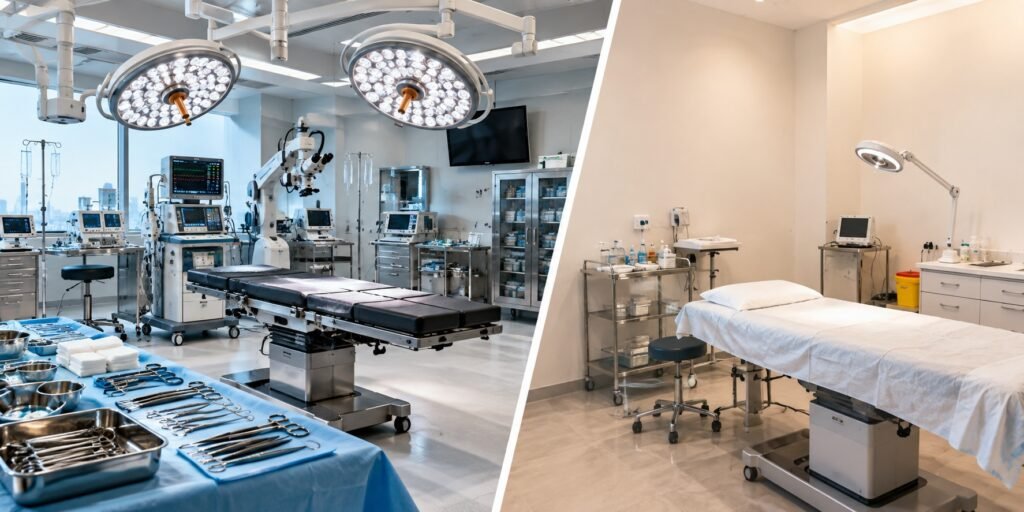
Surgeon involvement. The clearest driver of quality and cost. A procedure where a board-certified surgeon designs your hairline, performs the channel opening, and oversees or performs implantation costs more than one where technicians handle most of that work. Ask explicitly who performs each stage of your procedure before you book.
Graft survival rate. Better surgical protocols, more careful graft handling, and techniques like hypothermic graft storage or OxyCure therapy improve how many transplanted follicles actually take root. A higher graft survival rate can mean needing fewer grafts total, which affects long-term cost.
Accreditation. JCI, TEMOS, ISO, and Ministry of Health certifications require investment on the clinic’s side. You’re partly paying for that infrastructure when you choose an accredited facility, and it’s worth something.
Volume. Clinics seeing five to ten patients per day spread their overhead differently than a surgeon seeing one patient per day. Neither is inherently better, but they produce different procedure experiences and pricing.
Hidden Costs People Forget to Budget For
The quoted price is rarely the final number. Before you commit to any clinic or country, account for these.
Travel and accommodation if not included in a package. A return flight from the US to Istanbul typically runs $600 to $1,200. If your procedure quote doesn’t include hotel, add $80 to $200 per night for a decent option near the clinic.
Time off work. Most procedures require at least one week of social downtime, especially if your work involves client-facing contact or physical activity. Factor in PTO or freelance revenue loss.
Aftercare products. A good post-op regimen typically includes a specialized shampoo, saline spray, and SPF for the scalp for the first two months. Budget $100 to $200.
Medications. Finasteride or minoxidil are often recommended post-procedure to protect existing hair. If you’re not already using them, add that ongoing cost.
Follow-up procedures. A significant percentage of patients particularly those with advanced loss require a second session 12 to 18 months after the first. Some clinics offer discount pricing for returning patients; factor this in if your hair loss pattern suggests you’ll need it.
Is a Cheap Hair Transplant a Bad Hair Transplant?
Not automatically, but the correlation is stronger in this field than in most. Unlike buying a cheaper car or a budget laptop, a hair transplant outcome is largely permanent. A botched hairline design, over-harvested donor area, or poor graft survival isn’t something you casually fix.

The correction procedures required can cost more than doing it right the first time, in money, in time, and in the amount of donor hair you have left.
That said, the cheapest option isn’t the worst option if the clinic is legitimate, surgeon involvement is clearly defined, and the price reflects genuine local market economics rather than corner-cutting. A $3,500 procedure at a qualified clinic in Houston isn’t inherently inferior to a $12,000 procedure in New York. A €1,200 procedure in Istanbul likely is inferior to a €2,800 one, though.
The question to ask isn’t “how cheap is this?” but “what does this price tell me about who’s doing the work and how carefully they’re doing it?”
Hair Transplant Cost FAQs

Does insurance cover hair transplants? Almost never. Hair transplants are classified as cosmetic procedures in most markets. The exception is procedures performed to correct scarring from accidents or medical conditions, which may qualify for partial coverage depending on your plan. It’s worth calling your insurer, but don’t plan around it.
Is financing available? Yes, at most US clinics. CareCredit, Alphaeon Credit, and in-house payment plans are common. Many Turkish clinics also offer payment installment options for international patients, though terms vary. A 12-month interest-free plan is available at several of the clinics listed in our Turkey directory.
Why do some clinics quote per graft and others quote flat rate? Per-graft pricing is standard in North America and the UK and puts the risk of underestimating graft count on you. Flat-rate pricing is more common in Turkey and Europe and includes all grafts needed. Neither model is inherently better but the flat-rate structure is more patient-friendly for planning purposes.
What’s included in a PRP treatment and is it worth the extra cost? PRP, or platelet-rich plasma therapy, involves drawing your blood, concentrating the growth factors, and injecting them into the scalp after the procedure to support graft healing and existing hair health. Cost varies from $300 to $800 as an add-on in the US; often included in Turkish packages. The evidence base is positive but not conclusive. For most patients it’s a reasonable addition, not a necessity.
Can I negotiate the price? At high-volume Turkish clinics, yes particularly on package inclusions like hotel tier or add-on treatments. At boutique surgeon practices, rarely. If you’re flexible on timing, some clinics offer lower rates for off-peak months.
What’s the cheapest country to get a hair transplant? India and Thailand offer the lowest headline prices, with reputable clinics quoting as low as $1,500 to $2,500 all-inclusive. For patients in Southeast Asia or Oceania, Thailand in particular has developed a strong reputation. The practical limitation for US and European patients is that the travel cost largely offsets the price saving compared to Turkey.
The Bottom Line on Cost
The real question isn’t how much a hair transplant costs, it’s how much the right hair transplant costs for your specific situation. A realistic budget for most patients:
If you’re based in the US and want to stay domestic: budget $7,000 to $12,000 for a quality FUE procedure at a mid-to-premium clinic, plus $500 to $1,000 for aftercare and medications.
If you’re open to traveling to Turkey: budget €3,000 to €4,500 all-inclusive for a reputable accredited clinic, plus €500 to €800 for flights depending on where you’re traveling from.
If you’re in the UK: budget £5,000 to £9,000 for a qualified domestic clinic, or €3,000 to €4,500 plus flights for Turkey.
The difference in outcome between a $7,000 US procedure and a €3,500 Turkey procedure at accredited clinics is not proportional to the price gap. That’s the honest reality of why medical tourism in this category has grown so consistently.
What matters more than the total price is the surgeon’s involvement, the clinic’s accreditation, the graft survival protocols they use, and whether their before-and-after documentation matches what they’re promising you.
Prices in this guide reflect publicly available 2026 market data and may vary by clinic and patient case. Always request an itemized quote before committing.