
Bad hair transplant results exist across every price point, every country, and every decade of the procedure’s history. They’re not rare anomalies. They’re common enough to have their own vocabulary, hair plugs, doll hair, pluggy hairlines, donor depletion, and common enough that a specific Reddit community dedicated to identifying and avoiding them has accumulated tens of thousands of members.
This article covers all of it honestly. What causes bad results, how to recognise the signs before you’re the one posting cautionary photos, what different types of failure look like, which can be fixed and which can’t, and what the specific red flags are that predict poor outcomes before you ever sit in the chair.
Understanding what goes wrong, and why, is one of the most useful things you can read before choosing a clinic.
What Causes Bad Hair Transplant Results
The first thing to understand is that bad results are almost never caused by the patient and almost always caused by the operator. Hair transplant surgery is one of the most operator-dependent procedures in all of elective medicine, the same technique, the same instruments, the same patient profile can produce dramatically different outcomes depending on the skill, experience, and integrity of the team performing it.
The root causes of poor outcomes fall into four categories: poor surgical technique, inadequate planning, wrong patient selection, and inadequate aftercare and follow-up. Most catastrophic results involve failures in more than one of these areas simultaneously.
Understanding each one changes how you evaluate clinics before you commit.
The 8 Main Causes of a Bad Hair Transplant
1. Unnatural Hairline Design
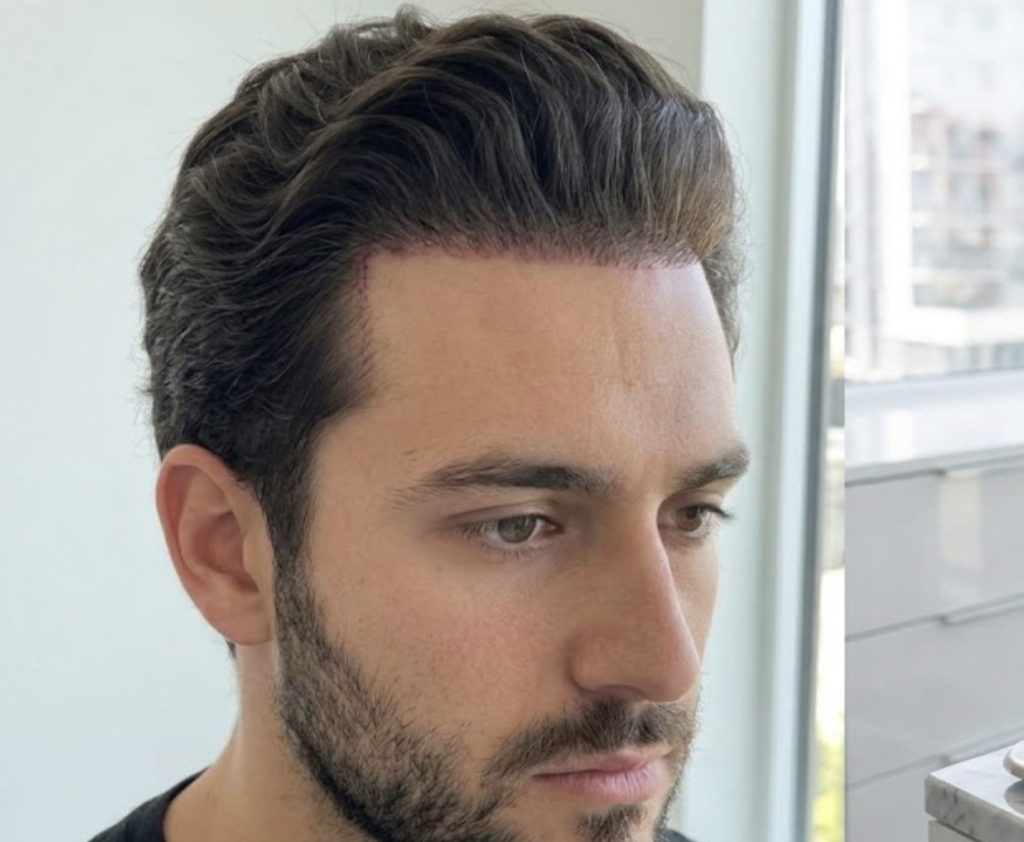
This is the most visible category of failure and the one most people picture when they think “bad hair transplant.” A poorly designed hairline is immediately detectable to anyone who looks, cannot be hidden by styling, and in many cases cannot be fully corrected without significant corrective surgery.
What makes a hairline unnatural:
Geometric placement. Natural hairlines are irregular, they have a soft, slightly uneven leading edge that creates a gradual transition from forehead to hair. A hairline drawn in a straight horizontal line across the forehead looks surgical because no natural hairline is perfectly straight. Yet this is exactly what some high-volume, technician-led operations produce when hairline design receives insufficient attention.
Wrong position. A hairline placed too low looks artificial because it doesn’t match the patient’s age or facial proportions. More insidiously, a hairline placed aggressively low on a patient in their thirties may look appropriate now but will look increasingly unnatural as surrounding native hair continues to recede over the next decade, leaving an isolated dense frontal hairline sitting above thinning crown coverage.
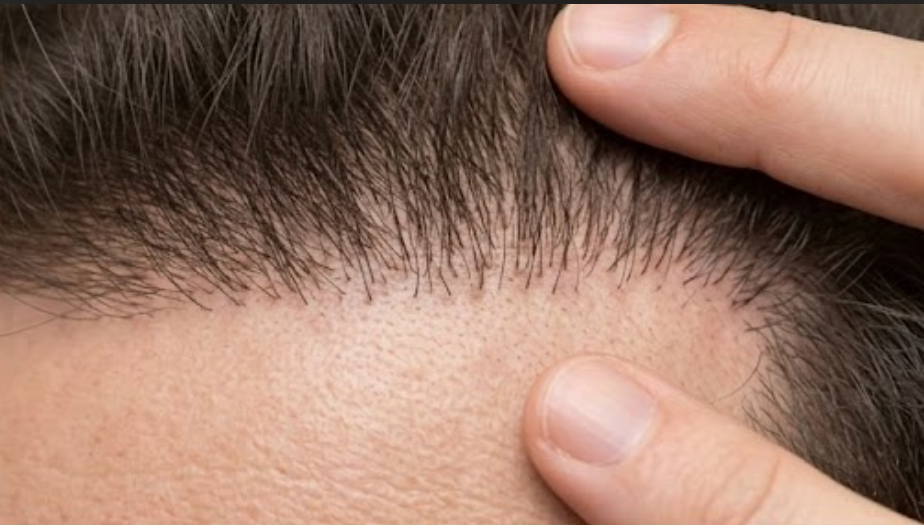
Harsh, uniform transition. Natural hairlines have a transition zone, a band of very fine, single-hair follicular units that create a soft graduation between the forehead and the denser hair behind. When this transition zone is missing, or when double-and triple-hair grafts are placed in the very front rows, the hairline has a hard, detectable edge.
Incorrect growth direction. Hair at the hairline grows forward and slightly downward at a shallow angle. Hair at the temples grows laterally. Crown hair radiates from the whorl. When channels are opened at the wrong angle, transplanted hair grows in directions that look wrong, upward, outward, or inconsistently, regardless of graft survival rate.
2. Over-Harvesting the Donor Area
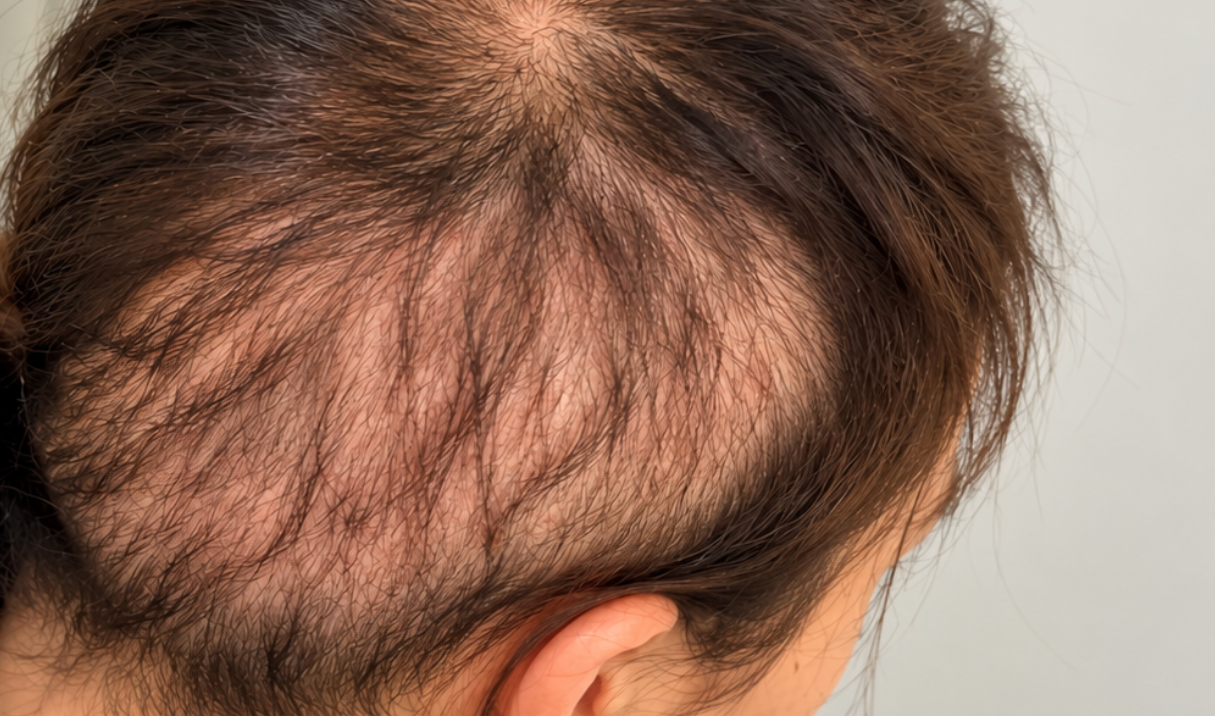
The donor zone at the back and sides of the scalp is a finite resource. The total number of grafts safely extractable over a lifetime — across all potential procedures — typically ranges from 4,000 to 8,000 depending on natural donor density. Exceeding that limit produces visible, permanent thinning at the donor site.
Over-harvesting happens in several ways.
Extracting too many grafts in a single session. High-volume clinics under pressure to deliver large graft counts — which they use as a marketing differentiator — sometimes extract grafts beyond the safe per-session limit for a given donor density. The result is a donor area that looks noticeably thin at normal hair lengths.
Concentrating extraction in too small a zone. FUE extractions should be distributed evenly across the safe donor zone to avoid visible depletion in any single area. Extracting too densely from a concentrated zone creates visible circular or patchy thinning even if the total graft count is within limits.
Ignoring miniaturization in the donor zone. In some patients — particularly women with female pattern loss and men with aggressive progression — the donor zone itself is not fully stable. Harvesting from a miniaturizing donor zone produces grafts that will themselves thin over time after transplantation, creating an unexpected result deterioration years after surgery.
Extracting from outside the safe zone. The “safe donor zone” is specifically the band of scalp that is genuinely DHT-resistant. Hair outside this zone — higher up the back of the head or in the temporal region above the normal line — may look dense now but is not reliably permanent. Grafts from outside the safe zone may thin post-transplant, producing results that fail over time even when the immediate post-operative result looks good.
3. Poor Graft Handling and Low Survival Rates
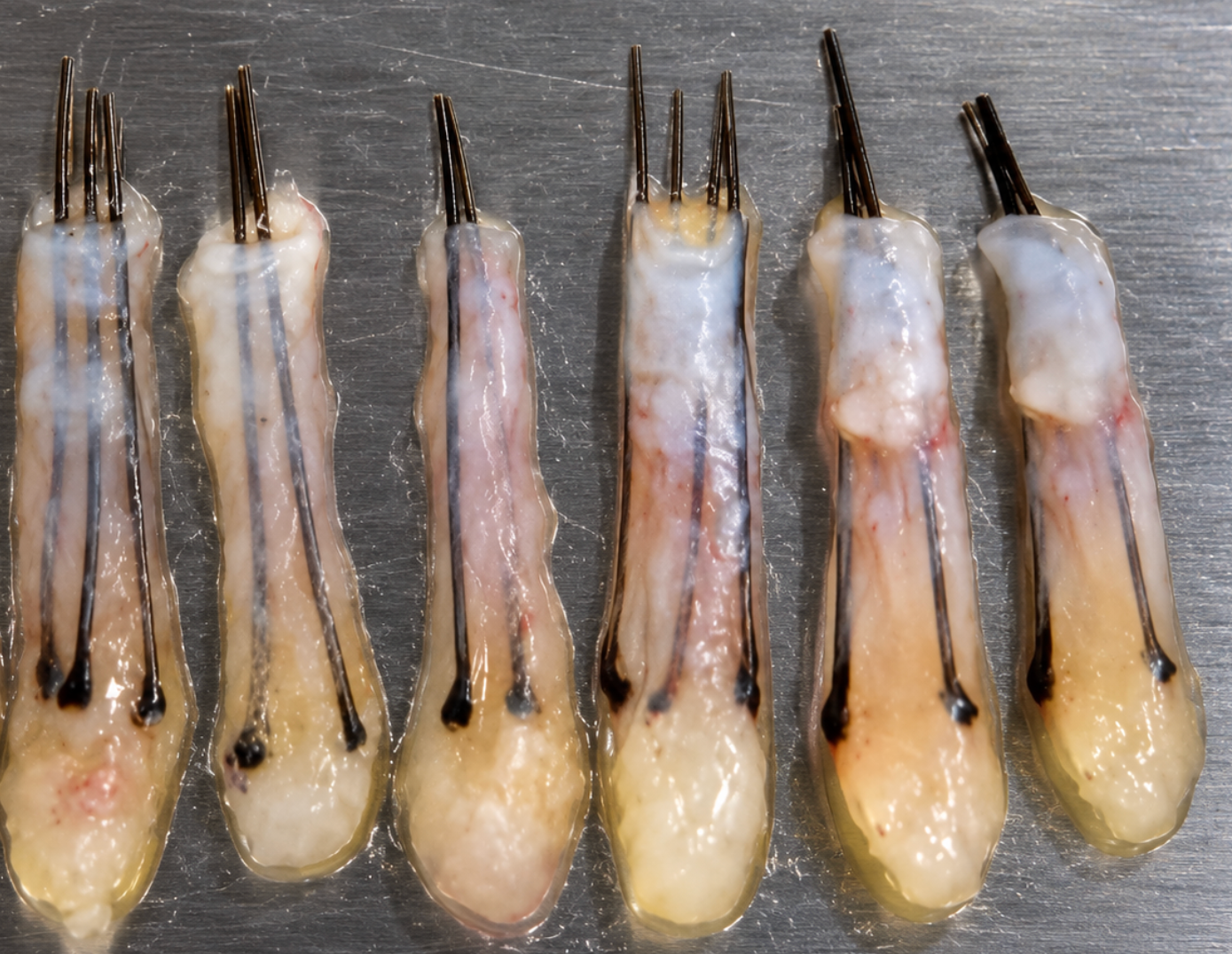
Extracted grafts are living tissue. Every minute they spend outside the body at suboptimal conditions, every time they are roughly handled, every mistake in storage temperature or solution — all of it accumulates as cellular damage that reduces how many of those grafts ultimately survive and grow.
The consequences of poor graft handling are invisible at the time of surgery and only become apparent months later when the expected density fails to materialise. A 3,000-graft procedure at 65 percent survival produces 1,950 growing follicles. The same procedure at 90 percent survival produces 2,700 — a difference of 750 grafts representing a significant density gap that the patient will see in the mirror but may not understand the cause of.
The specific graft-handling failures that lower survival rates:
High transection rate. During FUE extraction, the punch tool must be angled precisely parallel to the follicle shaft to avoid cutting through it. Inexperienced operators — or experienced surgeons working too quickly — produce transection rates of 15 to 25 percent, meaning that proportion of extracted grafts are damaged and unlikely to grow. The graft looks intact in the dish but the follicle root has been severed.
Extended out-of-body time. Grafts should be implanted as quickly as possible after extraction. Operations where all extraction is completed before implantation begins — rather than running the two stages concurrently — expose grafts to extended periods outside the body that degrade survival rates.
Inadequate holding solution. Basic saline at room temperature is acceptable for short out-of-body periods. For long procedures with large graft counts, chilled or advanced preservation solutions (HypoThermosol, Plasma Lyte with ATP supplementation) meaningfully extend graft viability. Clinics using basic saline for 4,000-graft eight-hour sessions are accepting avoidable graft loss.
Dehydration. Grafts must be kept moist throughout the procedure. Exposure to air drying — from inadequate solution coverage or slow loading during implantation — damages the outer sheath cells critical for vascularisation.
4. High-Volume Technician-Led Procedures
This is the systemic cause underlying many of the specific failures listed above. The “hair mill” operating model — where a named surgeon consults briefly, designs a hairline, and then hands the patient to a team of technicians for extraction, dissection, and implantation — is the dominant model at the bottom of the quality spectrum globally.
The named doctor is technically “present” — which satisfies legal requirements in most jurisdictions — but the actual surgical work is performed by paid technicians who may have received months rather than years of training, who are incentivised by throughput rather than quality, and who lack the clinical judgment to recognise and adapt to complications during a procedure.
Technician-led extraction produces higher transection rates. Technician-designed hairlines lack the aesthetic judgment that determines long-term naturalness. Technician-performed implantation produces inconsistency in angle, depth, and direction across thousands of grafts. The cumulative effect of all these small failures is a result that falls significantly short of what a surgeon-led procedure at equivalent graft count would produce.
This is why asking “who performs extraction, who opens the channels, and who does implantation — and will the same surgeon who consults me be present and active throughout?” is the most important single question in any hair transplant evaluation.
5. Wrong Patient Selection
Not every patient who wants a hair transplant should have one — at least not right now, and not with their current loss pattern. Operating on the wrong patient produces outcomes that look poor not because the surgery was technically poor but because the clinical situation made a good result impossible.
Operating on unstable hair loss. A patient in their mid-twenties with rapidly progressing hair loss who receives a hair transplant today may have a natural-looking result at month twelve. Three years later, continued native hair loss surrounding the transplanted zone produces a result that looks increasingly unnatural — a dense transplanted hairline floating in front of thinning crown coverage. The surgery wasn’t bad. The timing was wrong.
Ignoring donor miniaturization. As covered above — harvesting from a partially miniaturized donor zone produces grafts that cannot reliably remain permanent.
Operating on alopecia areata or unstabilized scarring alopecia. Autoimmune hair loss conditions that are active at the time of surgery will attack transplanted follicles as readily as native ones. Patient selection requires confirmation that such conditions are genuinely stable — typically two or more years of confirmed remission under dermatological supervision.
Performing surgery on patients with unrealistic expectations. A patient with Norwood 7 loss who expects a full, youthful head of hair cannot be given one — the donor supply isn’t available to cover that area at meaningful density. Operating anyway and accepting the patient’s expectations as the target produces an inevitable outcome gap regardless of technical quality.
6. Inadequate Post-Operative Care
Some outcomes that patients experience as “the transplant failing” are actually the consequence of post-operative care failures — the patient’s own decisions in the weeks following surgery that compromised graft survival or healing.
Early physical trauma to grafts. Grafts are vulnerable to displacement for the first 72 hours. Sleeping face-down, rubbing the recipient area, wearing tight hats that press on the grafts, or strenuous exercise that raises blood pressure and causes scalp engorgement in the early days can all dislodge anchoring grafts. A procedure that survived the operating room can be partially compromised by a single day of inadequate post-operative care.
Sun exposure. UV exposure to the recipient zone in the first months damages healing tissue and can produce hyperpigmentation or scar tissue formation in some patients.
Resuming smoking or alcohol immediately. Both compromise wound healing and vascularisation — the critical process by which transplanted follicles establish their new blood supply.
Scratching the scabs. The itching that accompanies scab formation in weeks one and two is one of the most difficult post-operative challenges. Scratching can remove scabs prematurely, dislodging or damaging the follicle beneath.
Ignoring persistent complications. Folliculitis — small pimple-like infected follicles in the recipient area — is common in the weeks after surgery and usually resolves with minimal management. Left untreated or ignored, severe folliculitis can damage transplanted follicles permanently. Patients who don’t have a clear follow-up relationship with their clinic, or who don’t know what to escalate, are at higher risk of complications becoming consequential.
7. The Legacy of Hair Plugs
If you’ve searched “hair transplant gone wrong” and seen images of people with rows of obvious, clumped hair sitting in an unnatural pattern — those are almost certainly hair plugs, not modern hair transplants.
Hair plug surgery was the standard technique from the 1950s through the 1980s. It used large punch tools (3mm to 5mm in diameter, compared to the 0.6mm to 1.0mm used in FUE today) to extract and transplant large circular clusters of fifteen to twenty follicles at once. The results were visible, unnatural, and look exactly like what they are — a surgical procedure performed with the aesthetic standards of a different era.
Modern hair transplant surgery — FUE, FUT, DHI — transplants individual follicular units of one to four hairs each, replicating the natural groupings in which hair actually grows. The technique is fundamentally different from hair plugs in both scale and philosophy.
Why this matters for 2026 readers: if you have a family member or acquaintance with hair plug results from decades ago, that appearance is not what modern surgery produces. The comparison isn’t fair or accurate. The techniques are not related beyond both involving follicle transplantation.
Patients who have existing hair plug results and want the appearance improved can in many cases have the large plugs refined and redistributed using modern FUE — a specialized corrective procedure performed by repair surgeons.
8. Infection and Medical Complications
Medical complications following hair transplants are uncommon at properly equipped facilities but not impossible. Understanding them allows you to recognise warning signs and respond appropriately rather than dismissing symptoms.
Folliculitis. The most common post-operative complication — small infected follicles appearing as pimples or pustules in the recipient area during the first two to six weeks. Usually mild and self-resolving, or responsive to topical antibiotics. Severe widespread folliculitis requires oral antibiotics. Picking or squeezing folliculitis spots can damage the underlying graft.
Cyst formation. In some patients, ingrown hairs from growing grafts create small cysts in the recipient zone during months two to four. These usually resolve spontaneously or require minor drainage. They are not a sign of graft failure.
Recipient area infection. Rare at properly sterile facilities. Characterised by increasing redness, warmth, swelling, discharge, and fever in the first week to two weeks post-procedure. Requires prompt medical attention and oral antibiotics. More common at clinics with inadequate sterilisation protocols.
Donor area wound complications (FUT). For FUT patients, closure site complications include wound dehiscence (the edges separating), infection, and in rare cases keloid formation. All require medical management. Keloid-prone patients should discuss this risk specifically before choosing FUT.
Trypophobia response. Worth addressing because “hair transplant trypophobia” generates 1,200 monthly searches. Trypophobia — an aversion to patterns of small holes or bumps — is triggered in some people when they see images of freshly transplanted scalps with multiple small graft insertion points. This is a psychological response to the appearance, not a complication of the procedure itself. The condition affects observers (including some patients who see their own post-procedure scalp) but has no medical significance. The appearance that triggers it resolves completely as healing progresses.
Signs of a Failed Hair Transplant
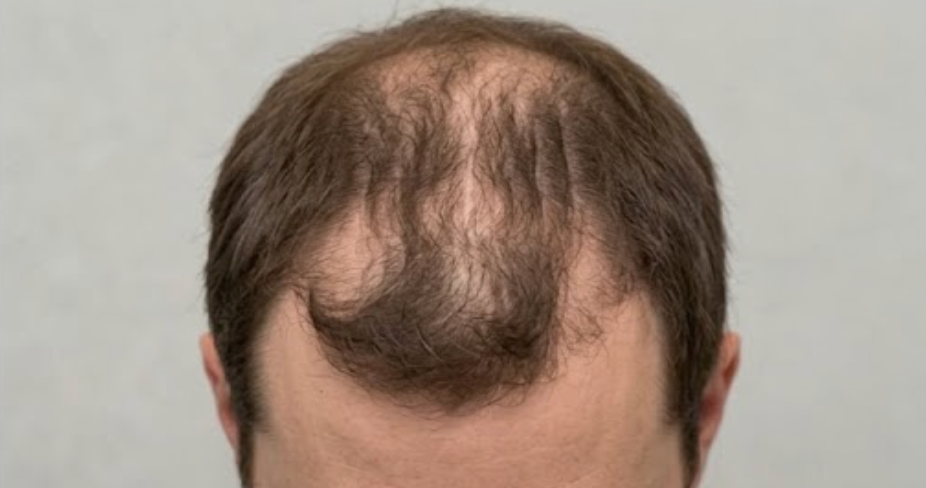
Not all disappointing results at six months represent final outcomes. The timeline for a hair transplant runs to eighteen months — what looks poor at month four may look very different at month twelve. But there are specific signs that suggest a genuine problem rather than normal slow progress.
Signs that suggest normal slow progress (not failure):
Zero growth at month three — completely normal. Most follicles haven’t completed their telogen rest phase yet.
Patchy, uneven growth at months four to six — normal. Follicles activate at different times, producing inevitable unevenness in early growth.
Fine, slightly wavy or curly texture in new growth — normal. Early anagen hair is characteristically fine before it thickens.
Signs that suggest a genuine problem:
No growth in any area at month seven or later. By month six to seven, at least some follicles in every zone should be producing visible hair.
Consistent growth in the wrong direction — hairs growing upward, outward, or at obviously unnatural angles across the entire transplanted zone rather than isolated patches. This suggests channel creation was performed at incorrect angles throughout the procedure.
Obvious graft clustering — visible groups of grafts sitting in detectable patterns, suggesting multi-hair units were placed in the hairline zone rather than single-hair transition units.
Progressive thinning of donor zone at normal hair lengths — suggests over-harvesting or harvesting outside the safe zone.
Persistent infected follicles beyond three months — may indicate graft survival issues combined with ongoing folliculitis.
Dramatic asymmetry not present immediately post-surgery — if one side of the transplanted area is significantly denser than the other, it suggests uneven graft distribution or differential survival across zones.
Celebrity Hair Transplant Gone Wrong

Celebrity hair transplant failures get substantial search traffic — and they serve a genuinely educational purpose beyond curiosity, because they illustrate specific failure types clearly.
The celebrity cases most commonly referenced as examples of poor outcomes share consistent patterns: they are almost all hair plug procedures from the 1980s and 1990s rather than modern transplants, or they involve heavily publicised procedures where commercial interests led to rushed timelines and inadequate planning.
Wayne Rooney’s hair transplant attracted enormous media attention and some criticism of the appearance in the months following — but this reflects the ugly duckling phase of a genuinely modern FUE procedure rather than a failed result. His twelve-month outcome was widely considered successful. The lesson: don’t evaluate a hair transplant result at three months.
The cases that represent genuine modern technique failures — rather than the ugly duckling phase or the hair plug era — typically show exactly the warning signs described above: geometric hairlines, inconsistent growth direction, visible graft rows, or donor depletion at the back of the scalp.
Searching for celebrity examples of bad results is useful research. But calibrating what you see against the timeline — is this a three-month photo or an eighteen-month photo — and the era — is this a 1990s hair plug procedure or modern FUE — is essential context.
Can a Bad Hair Transplant Be Fixed?
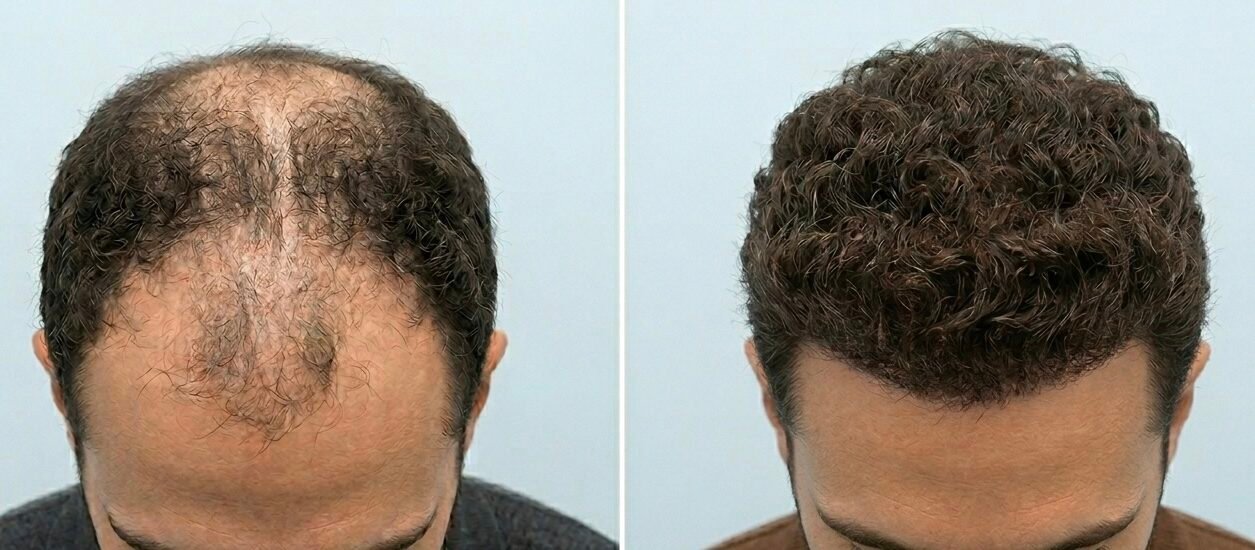
The honest answer is: sometimes, partially, at significant cost, and not always to the standard of an original well-executed procedure.
What can typically be improved:
Geometric or overly harsh hairlines can often be softened by adding additional single-hair grafts to the transition zone in front of the existing hairline, creating a more natural graduation. This requires available donor supply and a surgeon experienced in repair work.
Visible graft clustering from hair plugs can be partially addressed by extracting large plugs, separating them into individual follicular units, and redistributing them more naturally — a specialised and technically demanding procedure.
Incorrect growth direction in isolated areas can sometimes be managed by strategically placing new grafts at correct angles between existing ones, visually dominating the direction of growth.
FUT scars can be improved through trichophytic revision, FUE into the scar, or scalp micropigmentation.
What typically cannot be fully fixed:
Severe over-harvesting that has permanently depleted the donor zone. There is no way to restore permanently removed follicles. Body hair FUE — using beard or chest hair — can partially supplement a depleted donor area but cannot replicate the natural texture and appearance of scalp hair at the back of the head.
Extensive scarring from infection or necrosis in the recipient zone. Scar tissue has reduced blood supply, making graft survival lower and healing less predictable than in normal scalp.
Hairlines placed significantly below the anatomically appropriate position. Removing transplanted hair from a hairline that is too low is technically possible but damages the follicles during removal and leaves its own scarring.
The repair surgeon reality:
Repair hair transplant surgery is genuinely specialised. Not all hair restoration surgeons perform repair work — it requires different skills, different planning tools, and specifically the patience to work around existing grafts and scarred tissue. If you need corrective work, seek surgeons who specifically advertise and have documented experience in repair procedures, rather than your local general hair transplant practice.
How to Avoid a Bad Hair Transplant
Everything in this article comes back to one central point: the overwhelming majority of bad hair transplant outcomes are predictable and preventable through proper pre-procedure research. Here is the checklist.

Verify surgeon credentials independently. ISHRS membership is verifiable at ishrs.org. Board certification in dermatology or plastic surgery is verifiable through the relevant national boards. A surgeon who claims credentials that cannot be independently verified has not earned those credentials.
Ask who performs each stage of your procedure. Specifically: who designs the hairline, who performs extraction, who opens the recipient channels, and who performs implantation. Will the same surgeon be present and active throughout, or will technicians handle the surgical stages? Get the answer in writing.
Ask about transection rate. An experienced FUE surgeon should know their typical transection rate and be willing to share it. Rates above 8 to 10 percent represent meaningful graft loss. Inability to answer is an answer.
Review before-and-after documentation matched to your profile. Not the clinic’s five best results. A library of cases with your hair type, loss pattern, age range, and graft count, documented at multiple time points including six months and twelve months. Reverse image search a selection of the photos.
Read independent reviews at scale. Trustpilot, Google Maps, RealSelf, and Bookimed all host reviews clinics can’t fully control. Volume and consistency over time is the signal. Look specifically for negative reviews — not to disqualify the clinic, but to understand what the pattern of complaints is and how the clinic responds.
Get at least two consultations. Significant divergence in graft count recommendations (more than 300 to 400 grafts) between surgeons warrants asking both to explain their reasoning. Surgeons who don’t conduct a physical examination or who quote you remotely based only on photos are not providing clinical assessments.
Be suspicious of extreme prices in either direction. A $25,000 procedure isn’t automatically better than a $10,000 one. A $3,000 all-inclusive package that seems dramatically cheaper than everything else you’ve seen is telling you something about what’s been removed from the equation.
Frequently Asked Questions
What does a hair transplant gone wrong look like? The most visible signs of a failed or poor hair transplant include an unnatural geometric hairline, visible graft rows or clumping, hair growing in incorrect directions, very thin or absent density despite adequate graft count, and visible donor area depletion at normal hair lengths. Most of these are consequences of poor surgical technique — hairline design errors, high transection rates, or technician-led procedures — rather than post-operative complications.
What is the most common cause of a bad hair transplant? Technician-led procedures where the named surgeon has limited or no involvement in extraction, channel creation, and implantation is the most common systemic cause of poor outcomes globally. Hairline design errors — geometric placement, incorrect angle, inappropriate position for the patient’s age — are the most visible individual failure type.
Can a bad hair transplant be fixed? Partially, in many cases, and with realistic expectations about the outcome. Harsh geometric hairlines can be softened by adding transition grafts. Hair plug clustering can be partially redistributed. Incorrect growth direction can be partially managed with additional strategic grafts. However, severe donor depletion, significant scarring, and fundamentally mispositioned hairlines cannot be fully corrected. Corrective surgery requires a specialist repair surgeon and available donor supply.
What is hair transplant trypophobia? Trypophobia is an aversion to patterns of small holes or bumps. It is triggered in some people when they see photographs of freshly transplanted scalps — the multiple small graft insertion points in the recipient area activate the trypophobic response. It is not a medical complication of hair transplant surgery. The appearance that triggers it resolves completely as healing progresses and scabs resolve. It affects observers of the images, not the medical outcome.
What are hair transplant side effects? Expected short-term effects include swelling in the forehead and around the eyes (days two to four), scabbing in the donor and recipient areas (days three to fourteen), and shock loss of transplanted hair shafts (weeks three to eight). Less common but genuine complications include folliculitis (infected follicles), cyst formation, and in FUT cases, closure site complications. Serious complications — infection, necrosis — are rare at properly equipped facilities but carry the risk of permanent scarring if untreated.
What is the difference between a hair plug and a hair transplant? Hair plugs were the standard technique from the 1950s through the 1980s, using large punch tools (3mm to 5mm) to transplant clusters of fifteen to twenty follicles at once. The results were visibly unnatural — visible circular clusters in detectable rows. Modern hair transplants (FUE, FUT, DHI) transplant individual follicular units of one to four hairs each, replicating the natural groupings in which hair grows. The techniques are fundamentally different in both scale and outcome.
How long does it take to know if a hair transplant has failed? A genuinely poor outcome typically becomes apparent by months seven to nine — by which point most follicles should be producing visible growth if they are going to. No growth at all in any zone by month seven, or growth that is clearly uneven in density and incorrect in direction, suggests a genuine problem. However, final results are not assessed until month eighteen, and many results that look disappointing at month four are entirely normal outcomes at month twelve.
What are the signs of a failed hair transplant? Genuine failure signs include no growth in treated areas by month seven, consistent growth at anatomically incorrect angles across the transplanted zone, visible graft clustering in the hairline, progressive donor area thinning at normal hair lengths, and significant asymmetry in density between zones. These are distinct from normal recovery milestones — the shock loss phase, the ugly duckling period, and the slow progressive growth of months three to six — which are expected parts of the recovery timeline.
Is turkey hair transplant gone wrong more common than in other countries? Poor outcomes from Turkish hair transplants are not more common at the accredited clinic tier than poor outcomes from equivalent-tier clinics elsewhere. The perception exists because Turkey’s market is large — it performs more procedures annually than any other country — which means the absolute number of poor results is higher even if the rate at quality clinics is comparable. Turkey’s budget tier, below approximately €1,500 to €2,000, does carry disproportionate risk — but this is a tier-specific risk, not a country-specific one.
The Bottom Line
A hair transplant gone wrong is almost always a preventable outcome. The causes are understood, the warning signs are identifiable before surgery, and the clinics and operators most likely to produce poor results share consistent, recognisable characteristics.
The best protection is the same research that identifies good clinics: verify credentials independently, confirm surgeon involvement at every stage, review before-and-after documentation that matches your profile, read independent reviews at volume, and be appropriately sceptical of anything — pricing, promises, or process — that falls outside the norms of the vetted market.
Most of the patients posting cautionary photos didn’t do that research. Not because they’re foolish — because they didn’t know what to look for. Now you do.
This article is based on published clinical literature, documented case outcomes, and patient experience research as of early 2026. hairtc.com is an independent editorial resource and does not accept payment from clinics for coverage or rankings.