
Hair loss in women is more common than most people realise, more emotionally significant than it’s given credit for, and more treatable through surgery than the conversation around it suggests.
The assumption that hair transplants are a male procedure has lingered long past its relevance. Women account for approximately 40 percent of hair loss sufferers globally, and while the number of women opting for surgical hair restoration is still lower than men, it has grown steadily every year as both awareness and surgical outcomes have improved.
The challenge is that female hair loss is genuinely more complex than male pattern baldness in several ways: the causes are more varied, the loss patterns are different, the surgical approach requires adaptation, and the candidacy criteria are more nuanced. This guide covers all of it, the types of hair loss that respond well to transplant surgery, the specific techniques used, what results look like, what the procedure costs, and how to find a surgeon with genuine female hair restoration experience.
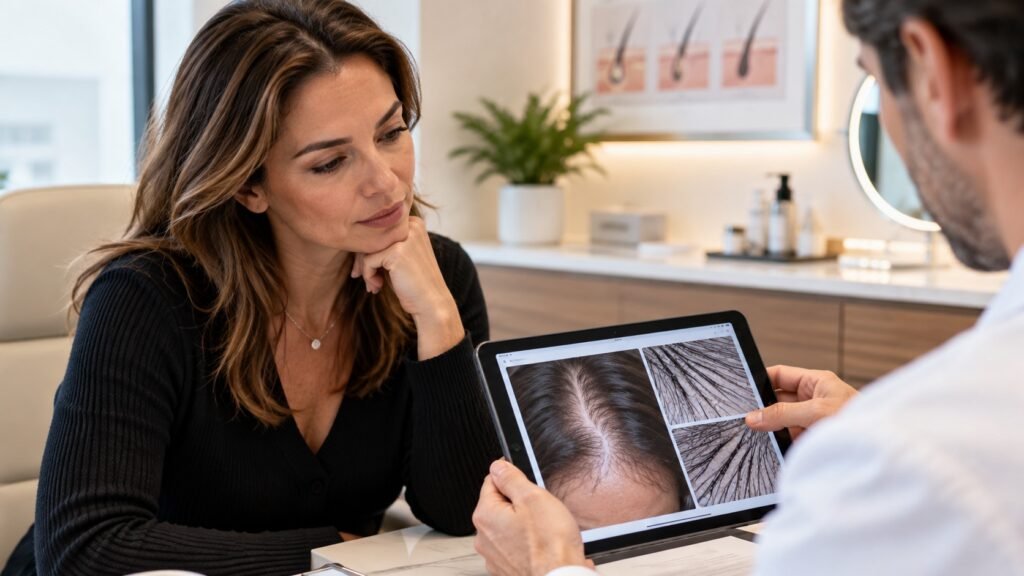
Why Female Hair Loss Is Different From Male Hair Loss
Understanding why female hair loss is treated differently starts with understanding how it differs biologically and structurally from the male pattern most people picture when they think about hair transplants.
Male pattern baldness (androgenetic alopecia in men) follows predictable patterns, the Norwood scale progressing in defined zones from the temples and crown inward. Crucially, men typically retain a stable, dense donor zone at the back and sides of the scalp that is genetically resistant to DHT, the hormone responsible for pattern loss. This stable donor zone is the foundation of hair transplant surgery: you harvest from where hair is permanent and place it where it’s been lost.
Female hair loss operates differently across several dimensions.
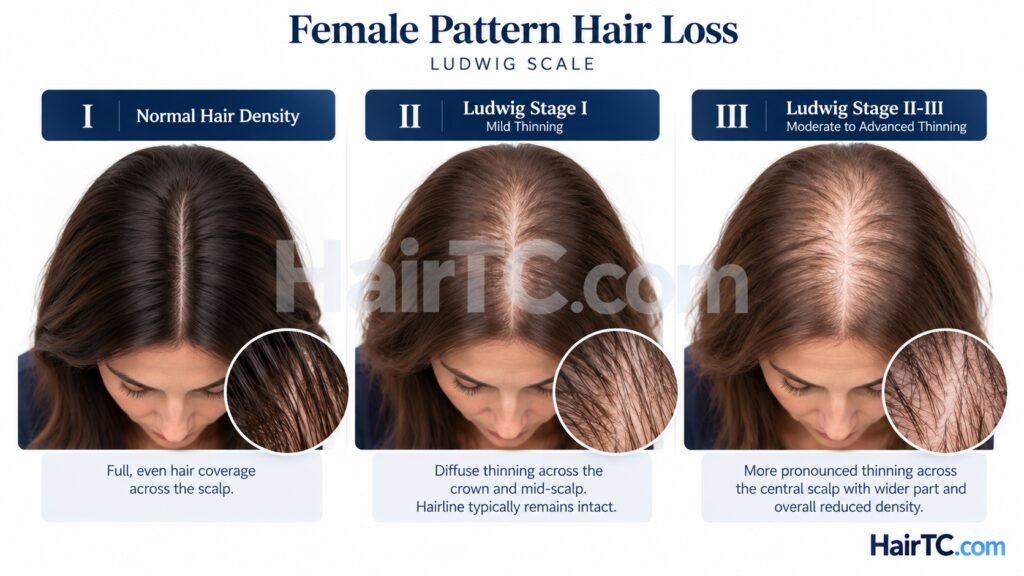
The most common cause in women, female pattern hair loss (FPHL), also called androgenetic alopecia in women typically produces diffuse thinning across the crown and mid-scalp rather than concentrated bald zones. The Ludwig scale classifies three stages of increasing diffuse loss. Critically, this diffuse thinning often affects the donor area too meaning the back and sides, which should be the reservoir for transplanted grafts, may themselves have compromised hair density that makes those follicles less reliably permanent.
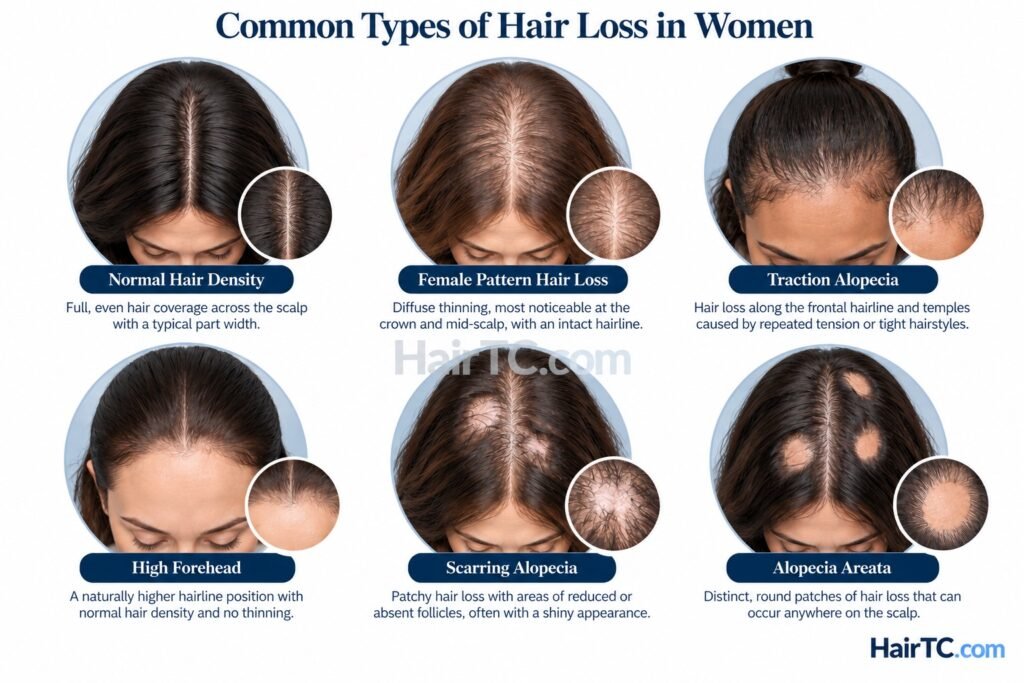
Women also experience hair loss from a wider variety of causes than men: traction alopecia from years of tight hairstyles, scarring alopecia from autoimmune conditions like lichen planopilaris, diffuse shedding from hormonal changes, nutritional deficiencies, thyroid conditions, and postpartum loss, most of which do not involve DHT and do not respond to the same surgical approach.
This complexity is why the candidacy assessment for female hair transplants is substantially more involved than for men, and why choosing a surgeon with specific female hair restoration experience, rather than one who primarily treats male patients, matters more than most guides acknowledge.
Types of Hair Loss in Women: Which Ones Can Surgery Help?
Not all female hair loss is surgically treatable. Understanding which type you’re dealing with is the first and most important question in the entire process.
Female Pattern Hair Loss (FPHL / Androgenetic Alopecia)
The most common cause of hair loss in women, estimated to affect up to 50 percent of women over fifty. Driven by a combination of genetic predisposition and hormonal sensitivity, though the DHT mechanism is less dominant in women than in men, which is one reason why finasteride (the primary medical treatment for male pattern loss) is used less frequently and with more caution in women.
Surgical candidacy: Possible in select patients, but requires careful evaluation. The critical question is whether the donor area has stable, permanent hair. Surgeons use the “miniaturization ratio” the percentage of follicles in the donor area showing signs of miniaturization (shrinking and weakening) as the key candidacy test. Donor areas with miniaturization rates above 20 percent are generally not suitable for harvesting, because transplanted follicles from a miniaturizing donor zone may themselves thin over time after transplantation.
Good candidates for surgical treatment of FPHL are typically women with Ludwig Stage I to early Stage II loss, stable donor density, and loss that has been medically managed and documented as stable for at least one year.
Traction Alopecia
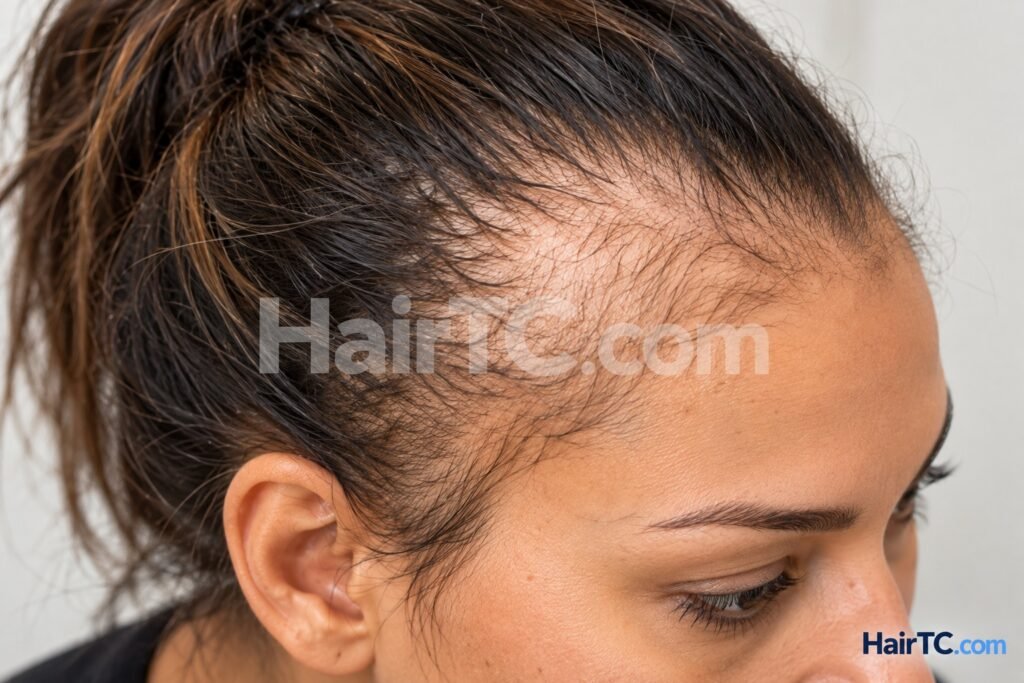
Hair loss caused by prolonged tension on the hair follicles from tight hairstyles braids, weaves, extensions, tight ponytails. The follicles are physically damaged by mechanical stress over time. The hairline is the most commonly affected area, particularly the frontal and temporal margins.
Surgical candidacy: Often excellent, particularly when the traction has been discontinued and the loss has stabilized. Because the cause is mechanical rather than hormonal, the donor area is typically unaffected and produces reliably permanent grafts. Frontal hairline restoration in women with traction alopecia is one of the most consistently successful applications of female hair transplant surgery.
The critical requirement: traction must be permanently discontinued before and after surgery. Continuing tight styling after a hair transplant will cause the same mechanical damage to the newly transplanted follicles.
Hairline Lowering / High Forehead
Not strictly a hair loss condition rather, a cosmetic concern where a naturally high forehead or receded hairline (without active hair loss) creates aesthetic dissatisfaction. Women with naturally high hairlines who want to bring the hairline closer to their brows are strong candidates for surgical hairline lowering using hair transplant techniques.
This is one of the most common female hair transplant applications globally and one of the most rewarding in terms of patient satisfaction. The scalp donor area is typically unaffected, the graft count required is relatively modest (800 to 1,500 grafts in most cases), and the aesthetic improvement can be dramatic.
Surgical candidacy: Generally excellent when there is no underlying progressive hair loss. The surgeon designs the new hairline to suit the patient’s facial proportions, typically lowering it by 1 to 3cm.
Scarring Alopecia (Cicatricial Alopecia)
A group of conditions including lichen planopilaris, frontal fibrosing alopecia, and discoid lupus erythematosus, where inflammation destroys hair follicles and replaces them with scar tissue. Hair loss in these areas is permanent.
Surgical candidacy: Complex and often restricted. Surgery into actively inflamed scarring alopecia is generally contraindicated; transplanted follicles will be attacked by the same inflammatory process. Surgery is only considered when the condition has been in documented stable remission (typically two or more years with no active inflammation or disease activity) under dermatological supervision. Even then, graft survival rates in scarred tissue are lower than in normal scalp. Several experienced surgeons do offer careful, limited procedures for stable scarring alopecia but patient selection is extremely conservative.
Alopecia Areata
An autoimmune condition where the immune system attacks hair follicles, causing patchy or diffuse loss. Unlike androgenetic alopecia, alopecia areata can spontaneously resolve and recur unpredictably.
Surgical candidacy: Generally not suitable for hair transplant surgery. The autoimmune mechanism will attack transplanted follicles as readily as native ones. Hair transplantation is not a treatment for active alopecia areata. Some surgeons have reported cautious procedures in patients with long-term stable alopecia totalis, but outcomes are highly variable and not standard practice.
Diffuse Thinning Without Pattern
General reduction in hair density across the scalp without a clear pattern, often related to hormonal changes (menopause, thyroid dysfunction), nutritional deficiency, or medication effects. Often reversible once the underlying cause is addressed.
Surgical candidacy: Low to none until the underlying cause has been identified, treated, and the loss has demonstrably stabilized for at least twelve months. Operating on actively shedding hair wastes donor supply and produces poor results.
How Hair Transplant Surgery Works Differently for Women
The fundamental surgical techniques FUE, FUT, and DHI are the same for women as for men. What differs is how they are applied to female-specific anatomy, hair loss patterns, and aesthetic goals.
The Donor Area Assessment
This is the most critical difference in female hair transplant surgery and the point where many less experienced surgeons make mistakes.
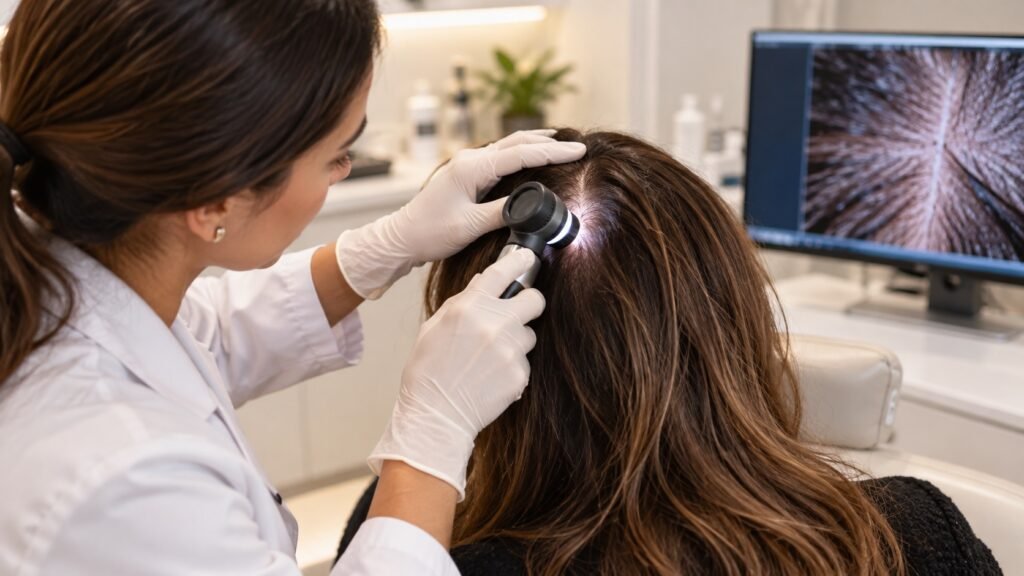
In male hair transplants, the safe donor zone the permanent band of hair at the back and sides is well-defined and reliably stable. In women with FPHL, that zone may be diffusely affected. Before any harvesting plan is made, an experienced surgeon performs detailed trichoscopy of the entire potential donor area, measuring the miniaturization rate at multiple points. The harvesting plan is built only from zones with miniaturization rates below 15 to 20 percent.
Harvesting from a miniaturizing donor zone produces grafts that will themselves thin over time after transplantation, potentially a worse outcome than not having the procedure at all. Getting this assessment right is the most important single variable in female hair transplant surgery.
No-Shave FUE: The Standard Approach for Most Women
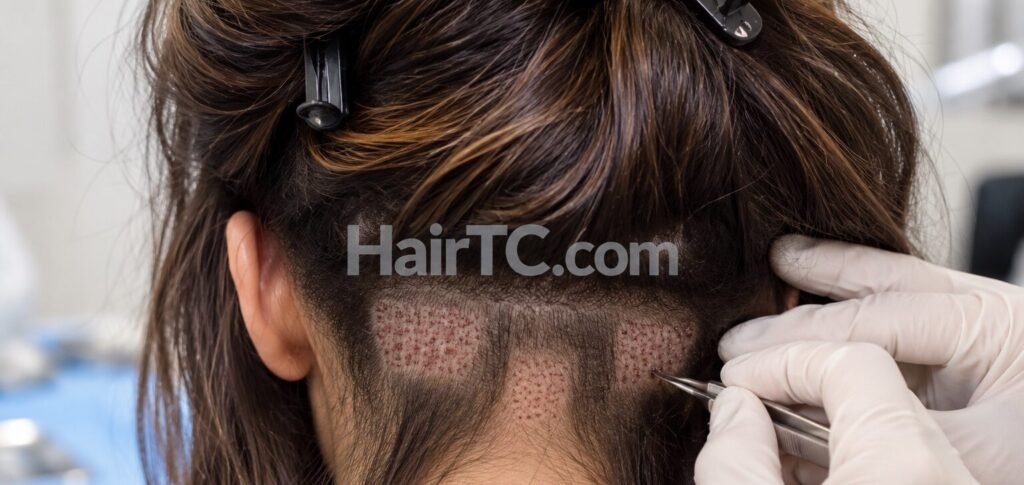
Standard FUE requires shaving the donor area to short stubble for extraction. For most male patients, this is inconvenient but manageable. For many women, particularly those in professional or public-facing roles, or those who haven’t disclosed the procedure to their social circle, a shaved donor area is a serious practical problem.
No Shave FUE (also called unshaven FUE or long hair FUE) modifies the extraction process to avoid fully shaving the donor area. Individual follicles are locally trimmed and extracted while surrounding hair remains at its natural length. The result: no visible change to the appearance immediately after surgery, at the cost of a longer, more technically demanding procedure.
Most experienced female hair transplant surgeons offer No Shave FUE as their standard approach for women rather than an optional upgrade. It takes 30 to 50 percent longer than standard shaved FUE and costs correspondingly more, but for most female patients the discretion benefit is worth it.
clinic hair transplant donor area
DHI for Maximum Discretion
DHI – Direct Hair Implantation using the Choi pen – is particularly well-suited to female patients for two reasons. First, the Choi pen allows implantation into areas with existing native hair without pre-opening channels across the entire zone, significantly reducing disruption to existing coverage. For women with diffuse thinning who want to add density to areas that still have meaningful existing hair, DHI causes less shock loss of surrounding native hair than standard FUE implantation.
Second, DHI’s capacity for high-density work in targeted zones makes it well-suited to hairline refinement and the frontal hairline work that represents a large proportion of female hair transplant procedures.
Hairline Design for Women
Female hairlines are fundamentally different from male hairlines in several ways that require specific surgical expertise.
A natural female hairline sits lower and has a different shape typically a gentle arch that comes to a slight V at the centre rather than the more angular geometry of a male hairline. The temporal corners are rounder and the overall profile is softer. The frontal transition zone the area of fine, vellus hairs at the very front of the hairline that create the graduation from scalp to full hair is typically more extensive in women than in men.
Surgeons who primarily design hairlines for men may produce hairlines that are too masculine in shape, too angular, or positioned too high or low for a woman’s facial proportions. Asking to see specifically female before-and-after documentation is essential before choosing a surgeon for female hair transplant work.
Who Is a Good Candidate for Female Hair Transplant Surgery?
The ideal female hair transplant candidate shares these characteristics.
Clear diagnosis of the hair loss cause. Before any surgical consultation, the cause of hair loss should be established by a dermatologist or trichologist. This rules out reversible causes (thyroid dysfunction, iron deficiency, hormonal imbalance) and confirms whether surgical treatment is appropriate. Walking into a hair transplant consultation without a diagnosis is putting the cart before the horse.
Stable hair loss for at least twelve months. Transplanting into an actively shedding scalp wastes donor grafts as the surrounding native hair continues to recede. Stability documented by serial photography or trichoscopy over twelve months is the minimum threshold for surgical candidacy in most practices.
Adequate donor density with low miniaturization. The back and sides must have sufficient density of healthy, permanent follicles for harvesting. The miniaturization rate in the donor zone should be below 15 to 20 percent for reliable graft permanence.
Realistic expectations about coverage and density. Female hair transplants add density to thinning areas they do not restore the appearance of a full, untouched head of hair for patients with advanced diffuse loss. The improvement can be meaningful and aesthetically significant without being complete.
Specific loss patterns that respond well to surgery. Traction alopecia with stable donor area, hairline lowering for high forehead, and select cases of FPHL with intact donor zones are the strongest indications. Diffuse thinning with compromised donor area, active alopecia areata, and unstabilized hormonal loss are the weakest.
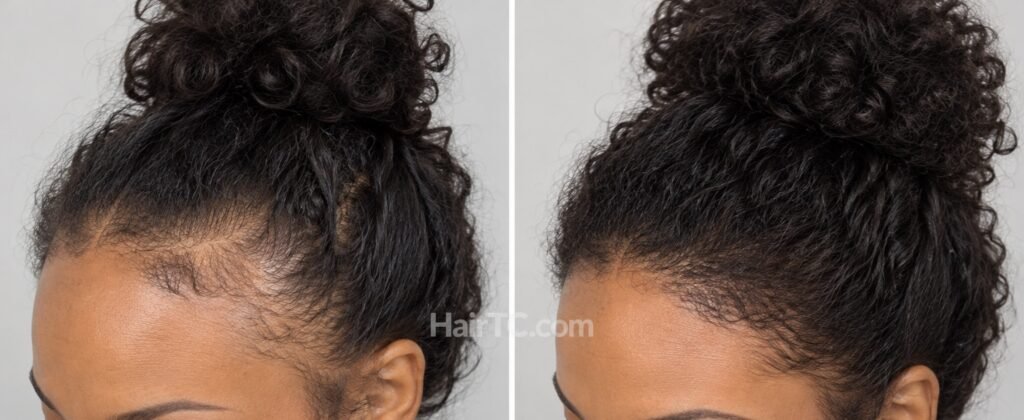
Female Hair Transplant Results: Before and After
Results from female hair transplants vary more than male results because the underlying causes and patterns are more varied. Here is what the evidence shows for each major application.
Traction alopecia hairline restoration: Among the best results in female hair transplant surgery. Graft survival rates are high because the donor area is typically unaffected. Patients who permanently discontinue tight styling and follow post-operative care correctly consistently achieve natural-looking hairline restoration. Results at twelve months are typically excellent.
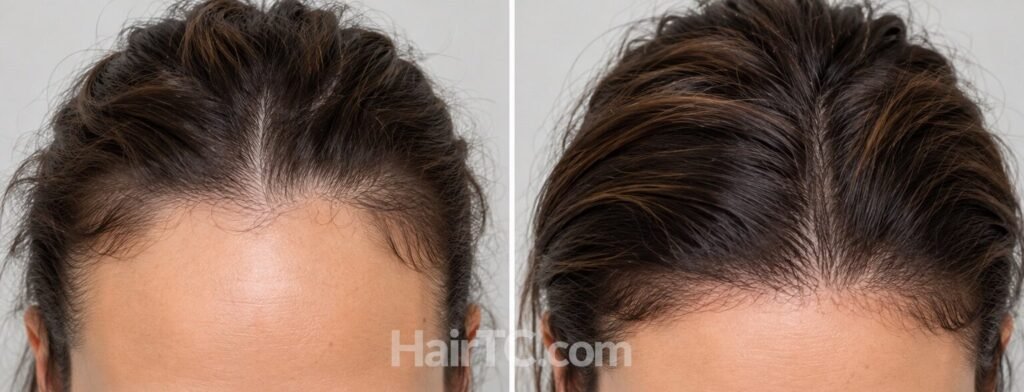
Hairline lowering for high forehead: Highly predictable outcomes with strong patient satisfaction rates. The procedure is relatively straightforward technically a defined target hairline, adequate donor supply, no underlying progressive loss. Results at twelve months match the planned hairline with natural density.
Female pattern hair loss select cases: More variable outcomes than the applications above, entirely dependent on donor quality. Patients with minimal donor miniaturization and early-stage FPHL achieve meaningful density improvements. Patients with compromised donor zones should not proceed to surgery and will see unpredictable long-term outcomes if they do.
Scarring alopecia stable remission cases: Lower graft survival rates than in non-scarred tissue (typically 60 to 80 percent versus 85 to 95 percent in normal scalp), but meaningful results are achievable in carefully selected patients with genuine long-term disease stability.
Female Hair Transplant Cost in 2026
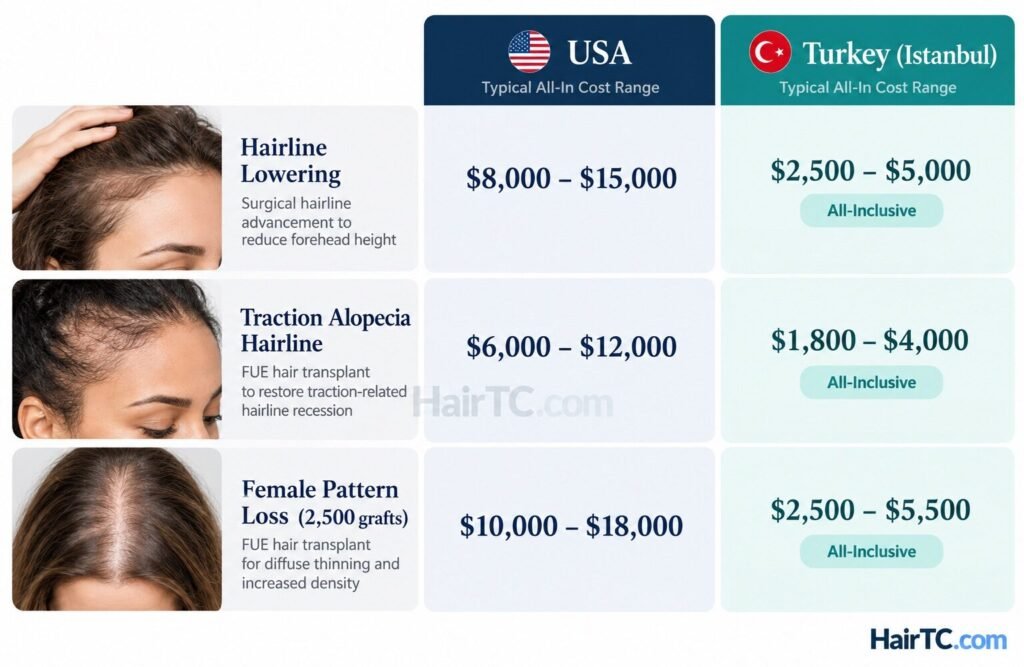
Women’s hair transplant costs follow the same market structure as men’s procedures, with one consistent addition: No Shave FUE, which is the standard approach for most female patients, carries a 30 to 50 percent premium over standard shaved FUE due to the additional procedure time.
United States: Female FUE (No Shave) at mid-tier US clinics: $7,000 to $16,000 depending on graft count and city. Hairline lowering procedures (typically 800 to 1,500 grafts): $4,000 to $9,000. Full female pattern loss coverage (2,000 to 3,000 grafts): $9,000 to $16,000.
Add $1,000 to $3,000 for ancillary costs pre-op tests, medication, PRP, follow-up appointments.
Turkey, Istanbul: All-inclusive female FUE packages at accredited Istanbul clinics: €3,000 to €5,000 (~$3,300 to $5,500) for standard cases. No Shave FUE adds approximately €400 to €800 (~$440 to $880) over standard FUE packages. Several Istanbul clinics specialise specifically in female hair transplants and have built dedicated No Shave FUE programs for international patients.
For US patients: add $700 to $1,100 for flights. Total approximately $4,500 to $7,000 compared to $10,000 to $19,000 domestically.
UK: Female FUE at accredited UK clinics: £5,000 to £11,000. Istanbul comparison: €3,000 to €4,500 (~£2,580 to £3,870) plus £280 flights, approximately £2,860 to £4,150 total.
Finding the Right Surgeon for Female Hair Transplant
The surgeon selection criteria for female hair transplants are the same as general hair transplant surgery ISHRS membership, verifiable credentials, before-and-after documentation at scale with several additions that are specific to female cases.
Ask specifically about female case volume. The techniques used for female hair restoration are different enough from male procedures, No Shave FUE, female hairline design, diffuse thinning assessment that a surgeon who performs primarily male procedures is not automatically qualified for female cases. Ask how many female procedures they perform per month and request to see a library of female-specific before-and-after documentation.
Verify their donor assessment protocol for women. Ask what miniaturization rate threshold they use for donor zone approval. Ask how they assess diffuse thinning cases. A surgeon who cannot clearly explain their donor assessment methodology for female patients is not performing thorough candidacy evaluation.
Check for trichologist or dermatologist collaboration. The best female hair restoration practices either employ or maintain close referral relationships with trichologists and dermatologists. Complex female hair loss frequently requires non-surgical medical management alongside or instead of surgery. A hair transplant surgeon who never refers female patients to dermatologists before surgery, and who never recommends against surgery for female patients they’ve assessed, is not practicing complete medicine.
Consult a dermatologist first. This is worth repeating as its own point. Before you see a hair transplant surgeon, establish a diagnosis from a dermatologist or trichologist. Know your hair loss type, its cause, its current activity, and whether it is stable. Walk into the surgical consultation with that information and you will have a more productive assessment.
Women Hair Transplant Turkey: Is It Available?
Yes, and Istanbul has developed specific expertise in female hair restoration that matches its male-focused reputation.
Several Istanbul clinics have built dedicated programs for female patients: No Shave FUE protocols designed specifically to preserve hairstyle discretion, female hairline design specialists, and multilingual patient coordination for the significant number of international female patients who travel specifically for this procedure.
Smile Hair Clinic, Sule Hair Transplant, and Cosmedica are among the Istanbul practices with documented female case portfolios and specific female hair restoration experience. Sule Hair Transplant is notable in that its founder, Sule Karatas Olmez, personally designs every patient’s hairline, a particular advantage for female patients where hairline artistry is central to the result.
The economics are as compelling as for male patients often more so, since the No Shave FUE technique that most women need is a large premium in domestic Western markets and included as standard in many Istanbul packages.
The considerations are identical to any Istanbul clinic selection: verify accreditation independently, confirm the surgeon’s specific female case experience, read independent reviews from female patients specifically, and confirm that No Shave FUE is genuinely included rather than an add-on.
Non-Surgical Options for Women: When Surgery Isn’t the Answer

For women who are not surgical candidates those with actively progressing loss, compromised donor areas, or hair loss types that don’t respond to transplant surgery non-surgical treatments deserve serious attention before reaching a conclusion that nothing can be done.
Minoxidil (Rogaine): The most established topical treatment for female pattern hair loss. Available OTC at 2 percent and 5 percent concentrations. Regular use produces measurable improvement in approximately 40 to 60 percent of women who try it. It does not stop hair loss permanently it requires continued use to maintain results.
Platelet-Rich Plasma (PRP) therapy: Injections of concentrated growth factors from your own blood into the scalp. Evidence base is mixed but positive for slowing progressive loss and improving density in early-stage FPHL. Often used in combination with other treatments rather than as a standalone approach.
Low-level laser therapy (LLLT): FDA-cleared devices laser caps, laser combs that use specific wavelengths of light to stimulate follicular activity. Evidence is limited but some patients report improvement in density and reduced shedding. Works best as a supplement to other treatments.
Hormonal management: For women whose hair loss is driven by hormonal factors polycystic ovary syndrome, thyroid dysfunction, post-menopausal estrogen decline addressing the hormonal cause often improves or stabilises hair loss without any direct hair treatment.
Nutritional optimisation: Iron deficiency, vitamin D deficiency, and protein deficiency are all common contributors to female hair loss and readily addressable. A comprehensive blood panel before pursuing any treatment is time well spent.
Frequently Asked Questions
Can women get hair transplants? Yes. Women are suitable candidates for hair transplant surgery in several specific circumstances: traction alopecia with a stable donor area, hairline lowering for a naturally high forehead, and select cases of female pattern hair loss where the donor zone has stable, non-miniaturized hair. Candidacy assessment for women is more complex than for men and requires evaluation of donor area quality, confirmation of hair loss type, and documentation of loss stability.
Do hair transplants work for women? Yes, when performed on suitable candidates by surgeons experienced in female hair restoration. Success rates for traction alopecia hairline restoration and hairline lowering are consistently high comparable to male hair transplant results. Female pattern hair loss results are more variable and depend heavily on donor zone quality.
What is the best hair transplant technique for women? No Shave FUE is the most commonly recommended technique for women because it avoids the visible post-procedure appearance of a shaved head. DHI is particularly well-suited to adding density in areas that still have existing hair, as it causes less disruption to surrounding native follicles. The right technique depends on your specific case.
How much does a female hair transplant cost? In the US, $7,000 to $16,000 all-in for most procedures. In Istanbul, €3,000 to €5,000 (~$3,300 to $5,500) all-inclusive, with No Shave FUE adding €400 to €800 (~$440 to $880) over standard FUE. In the UK, £5,000 to £11,000.
Can women with diffuse thinning get a hair transplant? Possibly, but with important caveats. The key question is whether the donor area has stable, permanent hair with low miniaturization rates. Women with diffuse thinning that affects the donor area as well as the recipient zone are generally not good candidates because transplanted follicles from a miniaturizing donor zone will themselves thin over time. A detailed trichoscopy assessment by an experienced surgeon is required to determine candidacy.
Is female hair transplant permanent? Grafts taken from donor zones with confirmed permanent, non-miniaturized hair are permanent, they retain their genetic resistance to thinning after transplantation. However, if the donor zone itself has diffuse miniaturization (common in FPHL), graft permanence is not guaranteed. This is the most critical assessment in female hair transplant candidacy.
Do I need to shave my head for a female hair transplant? Not necessarily. No Shave FUE (unshaven FUE) allows the procedure to be performed without fully shaving the donor area, leaving surrounding hair at natural length. Most experienced female hair transplant surgeons offer this as their standard approach for women. It takes longer and costs more than standard shaved FUE but preserves discretion throughout recovery.
What causes hair loss in women? The most common cause is female pattern hair loss (androgenetic alopecia), estimated to affect up to 50 percent of women over fifty. Other causes include traction alopecia from tight hairstyles, hormonal changes (PCOS, menopause, thyroid dysfunction), nutritional deficiency (particularly iron and vitamin D), autoimmune conditions (alopecia areata, lichen planopilaris), post-partum shedding, and medication side effects. Establishing the cause through dermatological assessment before pursuing any treatment is the essential first step.
What is traction alopecia and can it be treated with a hair transplant? Traction alopecia is hair loss caused by prolonged mechanical tension on the follicles most commonly from tight braids, weaves, extensions, or ponytails. The hairline, particularly the temporal and frontal margins, is most commonly affected. Hair transplantation works very well for traction alopecia when the cause (tight styling) has been permanently discontinued and the loss has stabilised, because the donor area is typically fully intact and provides reliable, permanent grafts.
Can hair transplant fix a high forehead in women? Yes, hairline lowering through hair transplantation is one of the most common and consistently successful female hair restoration procedures. The surgeon designs a new hairline appropriate to the patient’s facial proportions, typically lowering by 1 to 3cm. Graft counts are relatively modest (800 to 1,500 grafts in most cases) and results at twelve months are typically natural-looking and permanent.
The Bottom Line
Female hair transplantation is a genuinely effective option for the right candidates and determining whether you’re the right candidate requires more careful assessment than the equivalent question in men.
The conditions that respond best to surgery are traction alopecia, hairline lowering for high forehead, and early-stage female pattern loss with a stable, non-miniaturizing donor area. For these patients, results are consistent, natural-looking, and permanent.
The conditions that require caution actively progressive diffuse loss, compromised donor areas, hormonal causes not yet stabilised are common enough in female hair loss that the appropriate starting point is always a dermatological diagnosis rather than a surgical consultation.
If you’re a candidate, the same research principles apply as for any hair transplant: find a surgeon with specific, documented female hair restoration experience, verify their credentials independently, see case documentation that matches your specific pattern, and have a consultation that assesses your donor area with trichoscopy rather than just photos.
The procedure has improved dramatically. The results available to women today are better than they were five years ago, the discretion offered by No Shave FUE removes one of the practical barriers that previously deterred women, and the global expertise in female hair restoration, particularly in Istanbul, is deep enough that outcome predictability has genuinely improved.
For the right candidate, it is life-changing. Getting the candidacy assessment right is the work that comes before the surgery.
This guide reflects clinical literature and documented practice as of early 2026. Euro/dollar and euro/pound conversions use approximate early 2026 rates (~1.10 EUR/USD, ~1.16 EUR/GBP). Individual results vary based on hair loss type, donor characteristics, surgeon skill, and post-operative care. hairtc.com is an independent editorial resource and does not accept payment from clinics for coverage or rankings.